

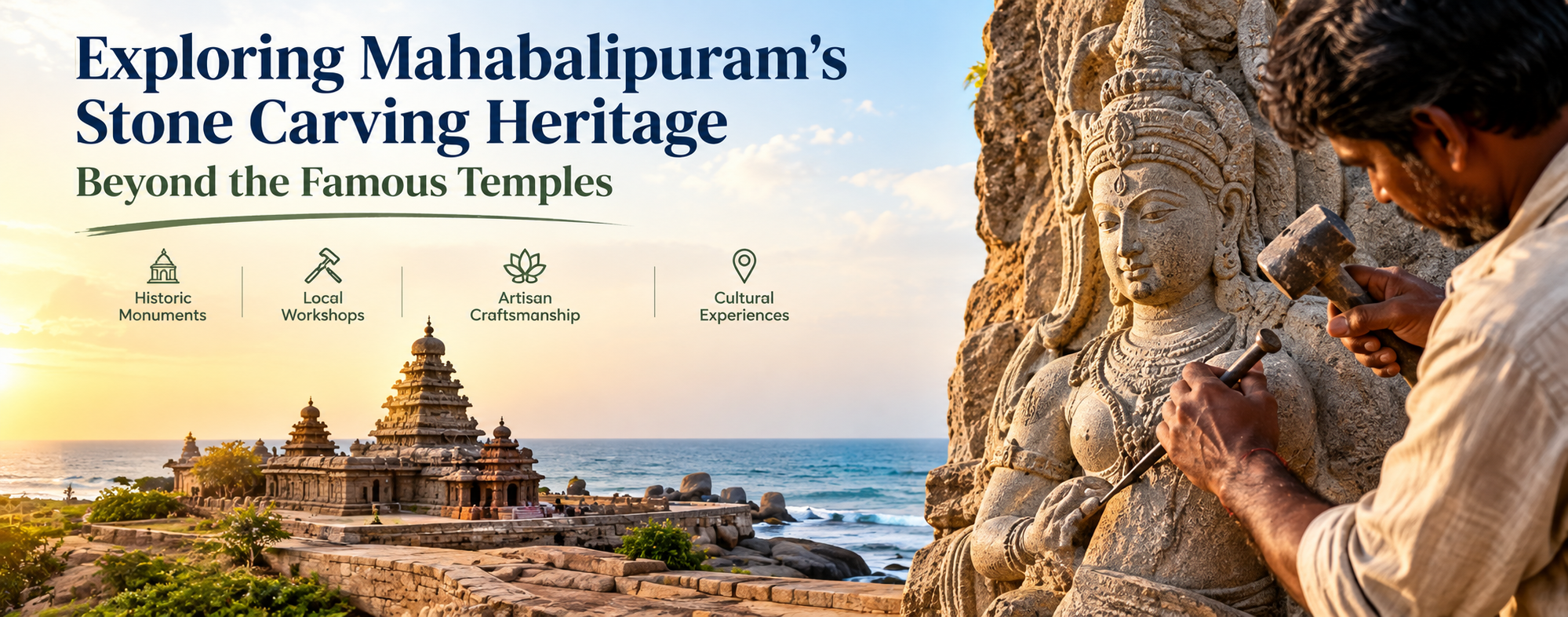
Mahabalipuram, also known as Mamallapuram, is one of Tamil Nadu's most fascinating coastal destinations. Famous for its ancient temples, rock-cut monuments and UNESCO World Heritage Site, this historic town attracts travellers interested in architecture, culture and history.
However, there is much more to Mahabalipuram than its well-known monuments. Beyond the Shore Temple and Five Rathas, the town has a remarkable stone carving tradition that continues to reflect the craftsmanship of Tamil Nadu's artisans.
From intricately carved sculptures to workshops where traditional skills are passed down through generations, exploring Mahabalipuram's stone carving heritage offers visitors a different perspective on this coastal town.
If you are planning a cultural getaway from Chennai, combining heritage exploration with a comfortable private villa stay along ECR can make your trip even more memorable.
The History Behind Mahabalipuram's Stone Carving Tradition
Mahabalipuram's artistic heritage dates back to the Pallava dynasty, particularly the 7th and 8th centuries.
During this period, Pallava rulers supported the development of remarkable rock-cut temples, monolithic structures and sculptural reliefs.
The town became an important centre for architectural experimentation and stone craftsmanship.
Some of its most recognised monuments include:
-
Shore Temple
-
Five Rathas
-
Arjuna's Penance, also known as the Descent of the Ganges
-
Varaha Cave Temple
-
Mahishasuramardini Cave
-
Krishna's Butter Ball
These monuments demonstrate the artistic knowledge, technical skills and cultural influences that shaped Mahabalipuram's identity.
Today, the town's stone carving tradition remains an important part of its cultural character.
Beyond the Monuments: Discovering Local Stone Carving Workshops
While most tourists visit Mahabalipuram to explore its historic monuments, local stone carving workshops offer another interesting experience.
As you travel through the town, you may notice workshops and shops displaying sculptures, decorative carvings and traditional stone artwork.
Many artisans specialise in creating sculptures inspired by Hindu mythology, temple architecture, animals and decorative motifs.
Visitors can observe how a rough stone gradually takes shape through careful cutting, chiselling and polishing, where workshop access and demonstrations are permitted.
Watching this process can help you appreciate the effort and attention involved in producing a finished sculpture.
How Traditional Stone Sculptures Are Created
Stone carving requires patience, artistic understanding and technical expertise.
Although tools and methods vary, the traditional process generally involves several stages.
1. Selecting the Stone
Artisans begin by choosing a suitable stone based on the sculpture's size, design and intended purpose.
Granite and other carving stones may be used depending on the artwork.
2. Preparing the Design
The sculptor develops the design, considering the proportions, details and overall appearance of the finished piece.
For traditional religious sculptures, established artistic conventions may influence the design.
3. Rough Carving
The artisan removes larger sections of unwanted stone to establish the sculpture's basic shape.
This stage requires careful planning because removing too much material can affect the final result.
4. Detailed Sculpting
Once the overall form is ready, the sculptor works on finer details such as facial expressions, ornaments, clothing and decorative patterns.
This stage often requires considerable precision.
5. Finishing and Polishing
The final stage involves refining the surface and completing the sculpture according to the desired finish.
The entire process demonstrates why stone carving is regarded as both an artistic and technical skill.
What Makes Mahabalipuram's Stone Sculptures Unique?
Mahabalipuram's stone carving tradition is closely connected to South Indian temple architecture and sculptural heritage.
Its artistic identity is influenced by the historic Pallava monuments and the region's longstanding traditions of religious and decorative sculpture.
Some distinctive characteristics include:
-
Detailed representations of deities and mythological figures
-
Sculptures inspired by traditional temple architecture
-
Animal and nature-inspired designs
-
Intricate ornamental patterns
-
Hand-carved decorative artwork
-
Traditional craftsmanship combined with contemporary designs
These artistic elements make the town an interesting destination for travellers who want to understand Tamil Nadu's cultural heritage beyond conventional sightseeing.
Visit the Government College of Architecture and Sculpture
An interesting place for visitors researching Mahabalipuram's artistic heritage is the Government College of Architecture and Sculpture.
The institution is associated with the study and preservation of traditional architecture and sculpture.
It reflects the importance of formal training in sustaining artistic knowledge and craftsmanship.
Visitors interested in sculpture education can learn about the institution beforehand and enquire whether public visits or educational interactions are permitted.
This can provide additional context for understanding how traditional artistic skills continue to be taught.
Explore the Stone Sculpture Shops Around Mahabalipuram
Another enjoyable way to experience the town's craftsmanship is by exploring local stone sculpture shops.
These establishments display artwork in different sizes, styles and designs.
You may find:
-
Traditional stone sculptures
-
Decorative garden statues
-
Animal figurines
-
Religious artwork
-
Architectural ornaments
-
Small handcrafted souvenirs
For travellers interested in purchasing a piece of local craftsmanship, these shops offer an opportunity to support artisans.
Before purchasing, ask about the stone material, production method, transportation arrangements and care requirements.
Understanding the Difference Between Ancient Monuments and Modern Sculptures
One of the most interesting aspects of Mahabalipuram is the relationship between its historic monuments and contemporary craftsmanship.
The ancient monuments were created under royal patronage and reflect the architectural practices of the Pallava period.
Modern stone carving workshops, on the other hand, produce sculptures for contemporary religious, decorative and architectural purposes.
Although today's artisans may draw inspiration from historic styles, their work also reflects changing customer preferences and modern production techniques.
Exploring both ancient and contemporary stone art helps visitors understand how artistic traditions can evolve over time.
Best Time to Explore Mahabalipuram's Stone Carving Heritage
Mahabalipuram can be visited throughout the year, but the cooler months are generally more comfortable for outdoor sightseeing.
The period from October to February is often preferred by travellers who want to explore monuments, local streets and artisan workshops.
During warmer months, morning and late-afternoon visits may be more comfortable than sightseeing during peak daytime temperatures.
If you plan to visit workshops, confirm their opening hours and whether visitors are welcome.
Plan a One-Day Stone Carving Heritage Experience
A well-planned itinerary can help you explore both the town's historic monuments and its living craft traditions.
|
Time |
Suggested activity |
|---|---|
|
Morning |
Visit the Five Rathas and observe the monolithic stone architecture |
|
Late morning |
Explore Arjuna's Penance and nearby rock-cut monuments |
|
Afternoon |
Visit local stone sculpture shops and permitted artisan workshops |
|
Late afternoon |
Explore the Shore Temple and surrounding heritage area |
|
Evening |
Return to your accommodation for relaxation |
This is a suggested sightseeing sequence rather than a fixed tour. Actual timings will depend on monument hours, weather, workshop access and your travel preferences.
Why Mahabalipuram Is Ideal for a Cultural Weekend Getaway
Mahabalipuram offers more than a conventional beach holiday.
Visitors can combine cultural exploration with coastal sightseeing, local food experiences and relaxing accommodation.
For travellers from Chennai, the East Coast Road makes Mahabalipuram a convenient destination for a short break.
Instead of rushing through the major monuments in a few hours, staying overnight allows you to explore the town at a more comfortable pace.
You can spend one part of your trip discovering the stone carving tradition and another enjoying the peaceful coastal surroundings.
Travellers planning an overnight visit can explore villas and resorts for rent in ECR for accommodation near Mahabalipuram.
Enjoy a Comfortable Stay at Lotus Villa Resort Near Mahabalipuram
After spending the day exploring ancient monuments and traditional stone carving workshops, returning to comfortable accommodation can make your trip more enjoyable.
Lotus Villa Resort, located in Venpurusham Village near Mahabalipuram, offers a private villa experience for couples, families and small groups looking for a relaxing coastal stay.
The property features a Bali-inspired villa with facilities such as:
-
Private swimming pool
-
Air-conditioned bedroom
-
Comfortable living and dining spaces
-
Equipped kitchen
-
Balcony and garden
-
Cabana and hammock
-
Wi-Fi and parking
Its location provides a convenient base for exploring Mahabalipuram's heritage attractions while enjoying privacy and relaxation during your getaway.
Whether you want to discover local craftsmanship, visit historic temples or simply enjoy a peaceful break from city life, Lotus Villa Resort offers accommodation for your ECR holiday.
Tips for Travellers Exploring Mahabalipuram's Stone Carving Heritage
Before planning your cultural trip, keep a few practical suggestions in mind.
-
Respect local artisans: Ask permission before photographing artisans or their workspaces.
-
Visit authorised areas: Some workshops and educational institutions may not permit unrestricted entry.
-
Choose comfortable clothing: Walking through monuments and local streets can take time.
-
Carry drinking water: Mahabalipuram can be warm, particularly during the afternoon.
-
Support local craftsmanship: Consider purchasing authentic handmade products directly from artisans.
-
Protect historic monuments: Avoid touching delicate carvings, climbing restricted structures or damaging heritage sites.
-
Plan enough time: Exploring the town's craft traditions is more rewarding when you are not rushing.
These simple practices can help you enjoy a responsible and meaningful cultural experience.
Conclusion
Mahabalipuram's stone carving heritage is an important part of Tamil Nadu's artistic and architectural history.
While the Shore Temple, Five Rathas and other Pallava monuments attract visitors from around the world, the town's contemporary artisans continue to contribute to its identity as a centre of sculpture and craftsmanship.
Exploring local workshops, understanding traditional carving techniques and discovering handmade sculptures can add a new dimension to your Mahabalipuram holiday.
For travellers from Chennai, combining this cultural experience with a private villa stay along ECR offers an opportunity to enjoy both heritage and relaxation.
Discover Mahabalipuram's living stone carving traditions and make your coastal getaway comfortable and memorable with Lotus Villa Resort.